Sunday, March 30, 2025

123rd High school day celebration of ISNHS


    The 123rd High School Day at Ilocos Sur National High School (ISNHS) was a day filled with excitement, tradition, and school pride. From the weeks of preparation to the grand event itself, every moment was filled with unforgettable experiences. This annual celebration is more than just an event, it’s a reminder of the school’s long-standing legacy and the strong sense of unity among students and teachers

    Before the big day, all students from Grade 7 to Grade 11 were busy preparing for the much-anticipated Field Demonstration. Each grade level had their own performance, with separate categories for boys and girls. The practice sessions were both exhausting and exciting, as we learned synchronized movements and formations, making sure every step was perfect. Though tiring, the practices helped us bond with our classmates and strengthened our teamwork.

    Aside from the field demo rehearsals, clubs and organizations were also preparing for their booths, which would be set up the day before the High School Day celebration. Each club was tasked with creating and decorating their own booth, making sure it was unique and engaging. Some sold food, drinks, and souvenirs, while others offered fun games and activities. These booths made the celebration even more enjoyable, giving students a chance to showcase their creativity and entrepreneurial skills.


    On the day of the foundation celebration, the event started with a parade, where students dressed in colorful costumes and proudly walked around the historic streets of Vigan before heading back to school. The parade wasn’t just a simple march, it was a showcase of discipline, school spirit, and unity. There was even an award for the Most Disciplined Section, which added excitement to the parade. Unfortunately, our section didn’t win, but it was still a great experience. The atmosphere was lively, with students waving to spectators, and the sound of the marching band filling the air.


    After the parade, we were given time to rest, refresh ourselves, and make final touches to our costumes before the Field Demonstration began.

    The Field Demonstration was one of the most awaited parts of the celebration. It started with the Grade 7 boys, who performed with enthusiasm, setting the tone for the rest of the event. Each grade level followed, with performances becoming more intricate and energetic. The Grade 11 boys had the honor of concluding the boys' category with an outstanding performance.

    For the girls' category, the Grade 7 girls performed first, impressing the audience with their well-practiced routines. As each grade level took their turn, the excitement in the crowd grew. Finally, the Grade 11 girls wrapped up the event with an impressive and well-coordinated performance. After all the performances, we eagerly awaited the results. The Grade 8 girls and the Grade 9 boys were announced as the winners, celebrating their well-earned victory. Even though not everyone won, it was clear that every participant gave their best effort, and the performances were a true display of talent and teamwork.

    After the field demo, we turned our attention back to the booths. Managing them was both fun and challenging. With so many students and visitors roaming around, we had to work together to make sure everything ran smoothly. Some of us handled the cash, while others assisted customers and promoted our products. It was a great experience that not only helped us raise funds but also taught us valuable lessons about teamwork, responsibility, and business skills.

    As the afternoon rolled in, the excitement shifted to the Battle of the Bands. The event showcased the musical talents of students, as different bands performed live in front of an energetic crowd. The performances were amazing, with students singing and playing instruments with passion. The energy was contagious, and the entire school cheered as each band took the stage.

    As the sun began to set, the celebration slowly came to an end. It was a day filled with laughter, excitement, and unforgettable moments. The 123rd High School Day was more than just an event, it was a celebration of our school’s rich history, the friendships we’ve built, and the lessons we’ve learned.

    Every year, this celebration reminds us of how ISNHS continues to grow and evolve while staying true to its values of excellence, unity, and service. Whether through performances, parades, or fun activities, we all took part in something truly special. Looking back at this day, we feel proud to be part of ISNHS, knowing that we are part of a long tradition of excellence. Here’s to many more years of celebrating the spirit of ISNHS! 

The Last Lesson Before a New Beginning


    Creating a website can feel like a whole new world, especially when you’re diving into software like Microsoft FrontPage for the first time. Looking back at my journey through the Fourth Quarter, I can see how much I’ve grown and learned. I gained a lot of new skills, especially when it comes to building webpages. I learned how to design a website, save my work properly, and create hyperlinks to connect different parts of the page. One of the most exciting things I discovered was how to make everything come together into a functional, well-organized webpage. This experience opened up new possibilities for me in the world of digital design, and I’m eager to use these skills in the future.

    Along the way, I did face a few challenges. Working with FrontPage wasn’t always easy. Managing different tasks, like designing the layout, adding content, and making sure all the links worked, felt overwhelming at times. I often ran into technical issues, such as problems with hyperlinks or formatting that weren’t behaving as I wanted them to. At certain points, I found myself stuck and unsure of how to solve the problems, so I had to ask my classmates for help. While they were kind enough to offer guidance, it wasn’t always enough, and I felt frustrated by my inability to quickly fix things.

    To overcome these challenges, I started to pay closer attention to how my classmates worked and followed their advice carefully. However, I also realized I couldn’t always rely on others, so I began to figure things out on my own. I spent extra time exploring the software, trying out different features, and testing different approaches. This hands-on practice helped me build more confidence and slowly, the problems that once seemed so complicated started to feel more manageable. Over time, I became more independent, and the process of creating webpages became less intimidating.

    Looking ahead, I’m excited to keep learning and expanding my skills. The knowledge I’ve gained with FrontPage is just the beginning. I know there’s much more to discover, and I’m eager to learn about other tools that can help me create even better websites. As technology continues to evolve, I want to stay curious and keep building on what I know. By doing so, I hope to apply these skills in meaningful ways, whether for personal projects or future career opportunities.

Free to Dream, Bound for Tomorrow

    As a kid, dream professions would change often. It would be because of what we see as something "cool" or because the people we idolize inspire us to follow in their footsteps. At one point, I wanted to be an astronaut, then a scientist, then an artist. But now, I have locked myself into a profession that is not just a silly dream, but a goal that will help sustain a living—not just my dream, but also my parents' dream—one that will help shape my future.


    I want to become a surgeon. I want to help people who are sick or injured and do my best to save as many lives as possible. No family should have to feel the pain of losing someone they love. Being a surgeon is not just about learning how to operate; it’s about caring for people and doing everything I can to give them a second chance at life. Every time I help save someone, I know I am making a difference—not just for them, but for their families too. Saving a life means giving someone more time to spend with their loved ones, to chase their own dreams, and to make new memories. That is something truly meaningful, and it is why I am so determined to become a doctor.

    Becoming a surgeon won’t be easy. It will take years of hard work, long nights of studying, and a lot of sacrifices. But I am ready to face those challenges because I know it will be worth it. There will be times when I feel exhausted or overwhelmed, but I will remind myself why I started. I want to dedicate my life to helping others, and I know that every effort I put in now will lead me closer to that goal. Being a doctor is not just a job; it is a promise to help others no matter what. It is about being there for people in their most vulnerable moments and doing everything I can to give them hope and healing. One day, I hope to look back and be proud, knowing that I have helped change lives for the better.


    I see myself 15 years from now as a surgeon who helps those in need, providing life-saving care and making a real difference in people's lives. I envision myself working in a hospital, surrounded by a dedicated medical team, using my knowledge and skills to treat patients and bring hope to families. I also hope to continue learning and improving, finding new ways to help people and maybe even teaching young doctors who share the same passion. More than just a profession, I see my work as a mission—to heal, to serve, and to inspire others to pursue their own dreams of helping people.

    Beyond my career, I also hope to grow as a person. I want to be someone who not only excels in my field but also remains kind, compassionate, and always willing to lend a hand. Success, to me, is not just about earning a title or gaining recognition. It is about touching lives, easing pain, and making a difference in the world. I believe that if I stay focused on my dreams and work hard, I will achieve everything I have set my heart on.


SOURCE:
Medical University of America. (n.d.). The different types of surgeons: A comprehensive list. Medical University of America. Retrieved from https://www.meduniversityamerica.com/surgeons-list

AMN Healthcare. (n.d.). How much do surgeons make? [Image]. AMN Healthcare. Retrieved from https://www.amnhealthcare.com/siteassets/candidate-blog/physician/perm/how-much-do-surgeons-make_-1.jpg


Like the Wind in a Storm


     March is Women’s Month, a time to celebrate the achievements of women and promote a more inclusive society. This year’s theme, WE for Gender Equality and an Inclusive Society, highlights the need for everyone to work together to break gender stereotypes and create equal opportunities. One person who truly represents this message is Hidilyn Diaz, the first-ever Filipino Olympic gold medalist. Her journey in the sport of weightlifting, which has long been dominated by men, is an inspiring story of hard work and determination. She faced a lot of challenges, but she proved that strength is not determined by gender.


      Hidilyn’s success did not come easy. Many people doubted her abilities simply because she was a woman competing in a male-dominated sport. Despite this, she worked hard, trained tirelessly, and pushed past the barriers set by society. Her dedication and achievements have shown that women can excel in any field they choose. Beyond her personal success, she continues to advocate for equal opportunities in sports, calling for better support, funding, and recognition for female athletes. She hopes to inspire young girls to pursue their dreams, no matter the obstacles they face.


      Hidilyn Diaz’s story is a reminder that true gender equality benefits everyone. When women are given the same opportunities and support as men, they can achieve incredible things. WE for Gender Equality and an Inclusive Society encourages us all to take action, whether through supporting women in our communities, promoting inclusive policies, or simply challenging outdated beliefs. Each step we take toward gender equality brings us closer to a fairer and more inclusive world where everyone has the chance to succeed.


REFERENCE/SOURCE:

Olympics.com. (2025, February 20). Hidilyn Diaz. Olympics. https://www.olympics.com/en/news/hidilyn-diaz-philippines-olympic-champion-weightlifting-added-palarong-pambansa

DA Regional Field Office 1. (n.d.). National Women's Month Celebration. Department of Agriculture. https://images.app.goo.gl/dFh4fB5796Zzds3Z6

CNN. (2021, July 27). Hidilyn Diaz. CNN. https://www.cnn.com/example-article

Tuesday, February 18, 2025

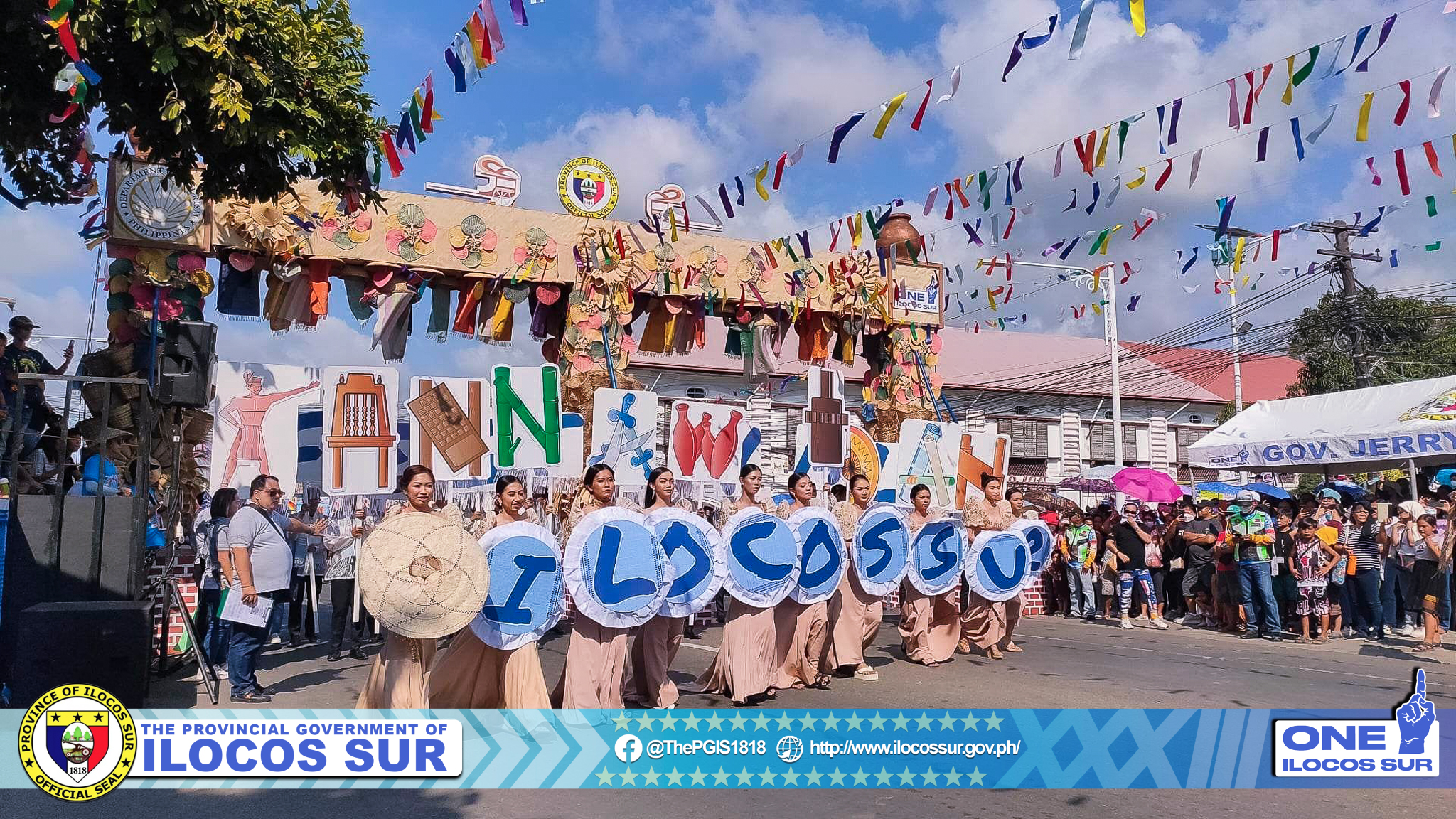
One Ilocos Sur


 Kannawidan is a cultural festival celebrated annually in Ilocos Sur, Philippines. It serves as an opportunity for Ilocanos to honor and preserve their history, traditions, and customs while promoting economic and tourism growth. The festival showcases traditional dances, music, local delicacies, and handcrafted products that represent the craftsmanship and culture of Ilocanos. Throiugh Kannawidan, people from different towns come together to celebrate their shared heritage and ensure that their traditions are passed down to future generations.


      One of the highlights of the festival is the trade fair, where local farmers, weavers, and artisans present their products to a larger audience. This not only helps sustain local businesses but also introduces Ilocos Sur’s unique goods to visitors. In addition, cultural performances, beauty pageants, talent competitions, and religious activities make Kannawidan a vibrant and meaningful event. The festival not only strengthens the local community but also invites tourists to experience the rich traditions of Ilocos Sur firsthand.


 Kannawidan is celebrated to commemorate the foundation of Ilocos Sur as a separate province from Ilocos Norte in 1818. This historical event marked the beginning of Ilocos Sur’s distinct political and cultural identity. The festival serves as a reminder of how the province has preserved its traditions while adapting to modern times. By holding this festival, Ilocanos can express their pride in their heritage and promote their local culture to the world.


   Aside from being a cultural event, Kannawidan also plays an essential role in the economic growth of the province. The festival allowss small business owners, farmers, and craftsmen to showcase their work to a broader market, helping them gain recognition and financial opportunities. This economic impact extends to tourism, as the influx of visitors during the festival generates income for local establishments such as hotels, restaurants, and transportation services. Additionally, the festival serves as a platform for young Ilocanos to appreciate their roots through educational exhibits, traditional games, and performances.


      Kannawidan Festival was first held in 2008 under the leadership of then-Governor Deogracias Victor “DV” Savellano. His goal was to create an event that would highlight Ilocos Sur’s rich culture while also supporting local industries. Since its inception, the festival has continued to grow, attracting both locals and tourists from various parts of the Philippines and beyond.


      The festival is typically held from late January to early February, coinciding with the province’s founding anniversary. Over the years, Kannawidan has expanded to include modern entertainment such as concerts, talent competitions, and sporting events. However, it has remained deeply rooted in its cultural origins, ensuring that Ilocano traditions continue to be celebrated and preserved. Today, it stands as one of Ilocos Sur’s most important annual events, contributing to both cultural preservation and economic progress.


      Kannawidan is a meaningful festival that highlights the importance of culture, unity, and economic growth. One of the most valuable aspects of the festival is its ability to bring communities together. Through cultural performances, trade fairs, and historical exhibits, Kannawidan strengthens the bond among Ilocanos while also welcoming people from outside the province. This inclusivity helps spread awareness and appreciation for Ilocano heritage on a broader scale.


      Another important impact of the festival is its support for local businesses. By providing a platform for farmers, artisans, and entrepreneurs to showcase their products, Kannawidan helps sustain livelihoods and promote economic growth. This not only benefits individuals but also contributes to the overall development of the province. Additionally, the festival serves as an educational experience for younger generations, reminding them of the importance of preserving traditions in a rapidly modernizing world.


       Overall, Kannawidan is more than just a festival, it isa celebration of history, identity, and community. It plays a crucial role in preserving Ilocos Sur’s cultural heritage while fostering economic opportunities and unity among its people. As the festival continues to evolve, it remains a testament to the resilience and pride of theIlocano people.


References


Bueno, J. P., Jr., & Arranz, E. E. (2019, January 31). Kannawidan Ylocos Festival: Pride of the Ilocanos. DepEd Ilocos Sur. Retrieved from https://depedilocossur.info/?p=2011


de Guzman, F. (2022). Kannawidan Festival: Its Effect on Merchants. ResearchGate. Retrieved from https://www.researchgate.net/publication/380264913_KANNAWIDAN_FESTIVAL_ITS_EFFECT_ON_MERCHANTS


Paradores de Vigan. (2018, December). History of Kannawidan Festival. Retrieved from https://paradoresdevigan.com/kannaw

idan


Ilocos Sur Kannawidan Festival 2023 Street Dance Competition. (2023). Retrieved from https://images.app.goo.gl/Lu8StFFpPUqA6CP7A


Kannawidan Ylocos Festival: Uppat a Tawenen a Mangitantandudo. (2023). Retrieved from https://images.app.goo.gl/Lyt1x8QsYVvAuqbd6


Cheap Travel for Women: 2014 Kannawidan Festival in Vigan City. (2014). Retrieved from https://images.app.goo.gl/JdpPv5vaoFreUtRu5


Saturday, February 15, 2025

The Day of Love


      Valentine’s Day dates back to ancient Rome, where a priest named Saint Valentine secretly performed marriages despite Emperor Claudius II banning them. The emperor believed that single men made better soldiers, so he outlawed marriage for young men. Valentine, seeing the injustice of this decree, continued to marry couples in secret. When he was eventually caught, he was imprisoned and later executed on February 14.


       Before his death, it is said that Valentine developed a close bond with the jailer’s daughter, whom he healed from blindness. According to legend, he left her a note signed “From your Valentine,” a phrase still used today. In 496 AD, Pope Gelasius I declared February 14 as St. Valentine’s feast day, replacing the ancient Roman festival of Lupercalia, a fertility celebration held on February 15. Over time, the day became associated with romance, and by the Middle Ages, it was widely recognized as a day of love. Today, it has transformed into a global celebration filled with gifts, grand gestures, and extravagant displays of affection.


      Now, don’t get me wrong, Valentine’s Day can be cute and fun. But here’s the thing, I think Valentine’s Day is just a normal day that’s being overly specialized. I’m not saying this because I’m single, but you can express your love to the person you love anytime. Why the need to be extra on that day? Does your love for someone have a specific day or time?


    If you love someone, why wait for February 14 to show it? Small, meaningful gestures throughout the year mean more than one grand display on a single day. Plus, Valentine’s Day can be stressful—some people feel pressured to go all out while others feel left out if they don’t have a Valentine. And let’s not forget the overpriced flowers and fully booked restaurants.


       At the end of the day, Valentine’s Day is what you make of it. If you love celebrating it, go for it. If not, that’s fine too. What truly matters is showing love and appreciation every day, not just when the calendar tells you to. For me, Valentine’s may be extra, but for some people, it can be the reason to build a stronger relationship. Nevertheless, it’s up to people what they want to do on Valentine’s Day. It’s just my opinion.


Sources


History.com Editors. (2023). History of Valentine’s Day. History. https://www.history.com/topics/va

lentines-day


NPR. (2021). The Dark Origins of Valentine's Day. National Public Radio. https://www.npr.org/sections/thetwo-way/2011/02/14/133693152/the-dark-origins-of-valentines-day


kittyboty. (n.d.). Illustration of a cat [Image]. Retrieved from https://images.app.goo.gl/e8NAsTcrTopX3KAK8


Brides. (2022, December 24). Your First Valentine’s Day as an Engaged Couple. https://images.app.goo.gl/ji6YnYiKvtTM5rce7


Anonymous. (2025, February 15). Happy valentine’s day everyone!! 🫶 [Pinterest post]. Retrieved February 15, 2025, from https://pin.it/2u7dX1Zxs


Tuesday, February 11, 2025

A Chaotic Journey

        Doing our Community-Based Research was fun and meaningful, but we also faced some challenges along the way. Even with the difficulties, we stayed determined to finish our research and learn from the experience.


        We were divided into groups and after that, we started studying what we needed to do. Once we were given our topic, we began planning our tasks. We also distributed the parts of the Community-Based Research (CBR) to make it easier for everyone. At first, we had little to no knowledge of what we were doing since it was our first time, but with Karl's help, we successfully completed the first challenge in conducting Community-Based Research.


        We created questionnaires to gather the information we needed for our research. We also planned to interview at least three people to get more detailed answers. To do this, we went out to distribute the questionnaires and look for people to interview. Even though it was challenging to find willing participants, we stayed determined and worked together to complete our task.


        This picture was taken after we were rudely rejected by the owner of the store where we were supposed to distribute our questionnaires. We almost lost hope and thought about stopping, but thankfully, some other store owners and staff were kind enough to accept them, which encouraged us to keep going. These were the times when, while giving out questionnaires, we also took the chance to explore and appreciate the different crafts of Vigan. As we walked around, we saw many handmade products, traditional artworks, and locally made items that show the rich culture and history of the place. It was a great experience, not just for our research but also for discovering the creativity and skills of Vigan’s artisans.


        After submitting our paper for the Community-Based Research (CBR), we created a webpage to present the different sections we worked on using HTML. We faced some challenges, like a lack of resources for coding, but we overcame them by working together. With Lavinia’s help, we successfully completed the webpage.


        We successfully finished designing our webpage and were able to present it confidently. Despite the challenges we faced along the way, such as limited resources and technical difficulties, our teamwork and determination helped us overcome them. In the end, we were proud of our work and how we effectively showcased the different parts of our project through the webpage.

New Discoveries Become New Skills


"Live as if you were to die tomorrow. Learn as if you were to live forever." – Mahatma Gandhi. This quarter, I have learned many new things that helped me grow in my studies.


One of the most important lessons I learned was about Community-Based Research (CBR). I did not just study it, but I also got to experience it myself by making our own research. This helped me understand how research is done in a community and why it is important. I learned how to gather information, analyze data, and present my findings in a way that helps others. Doing research was not easy because it required patience, teamwork, and good organization, but it was a great learning experience.


I also learned how to create a simple webpage using HTML. At first, I thought it would be very difficult, but as I practiced, I realized that it follows a pattern. I learned how to use different HTML tags to format text, add images, and create links. Seeing how a webpage is built was exciting because I now understand how websites work and how they are designed.


Another skill I learned was creating lists using HTML. Ordered lists are used when steps need to be followed in a sequence, while unordered lists are useful for listing items without a specific order. I also learned how to make nested lists, where one list is placed inside another. This skill is helpful in organizing information clearly, whether in a webpage or a document.


Of course, I faced some challenges along the way. In research, I sometimes found it hard to organize my work and follow the correct steps. In making a webpage, I made mistakes, like missing a tag, which caused errors. But I did not give up. I asked for help from my teachers and classmates, and I made sure to review my work carefully.


Moving forward, I will continue to improve my research skills and practice more on HTML coding. I know these skills will be useful in the future, whether in creating websites, organizing information, or doing research. This quarter has been full of new learning, and I am excited for what’s next! 

Embracing Foreign Traditions


Why do Filipinos celebrate Chinese New Year? Chinese New Year is one of the most important celebrations in Chinese culture. It marks the start of the lunar new year and is filled with traditions meant to bring good luck, happiness, and prosperity. In the Philippines, many Filipinos join in celebrating this occasion, even if they are not Chinese. The strong connection between Filipinos and the Chinese community has made this event an important part of the country’s culture.


The history of Chinese influence in the Philippines goes back hundreds of years. Even before the Spanish arrived in the 1500s, Chinese traders came to the country to buy and sell goods. Some of them decided to stay, married Filipinos, and became part of the local community. Over time, their traditions blended with Filipino customs, creating a unique mix of cultures. During the Spanish period, Chinese immigrants played a big role in business and trade, despite facing some challenges. Today, Filipino-Chinese families continue to contribute to the country’s economy and culture, making their traditions more visible and appreciated.


During Chinese New Year, families and communities celebrate in different ways. Dragon and lion dances are common in streets, malls, and temples. These dances are believed to bring good luck and drive away bad spirits. Fireworks and firecrackers are also an important part of the celebration because they are said to scare away bad luck. Elders give red envelopes, called ang pao, filled with money to children as a symbol of good fortune. Special foods are prepared, such as tikoy (sticky rice cake for stronger family ties), pancit (noodles for long life), and dumplings (which symbolize wealth). Many people also visit temples to pray for good health, success, and happiness in the coming year.


References/Sources:

Rove.me.(2025, January 29).Chinese New Year 2025 in Philippines.https://www.google.com/imgres?imgurl=https%3A%2F%2Fimages.rove.me%2Fw_1920%2Cq_85%2Fiy43pdrmi1ch0umdbalu%2Fphilippines-chinese-new-year.jpg&tbnid=-sC4O-j-r3MEdM&vet=1&imgrefurl=https%3A%2F%2Frove.me%2Fto%2Fphilippines%2Fchinese-new-year&docid=fAeJqWJi1lhAlM&w=1920&h=1275&hl=en-US&source=sh%2Fx%2Fim%2Fm6%2F4&kgs=440af32eed715217


ABS-CBN. (2025, January 24). Chinese New Year 2025: 'Lucky' dishes and new outfits to welcome the Year of the Snake. https://images.app.goo.gl/4LQvjtmE7Co33Fd79


Philippines News Agency. (2035, January 28). FINDING LUCK. https://www.google.com/imgres?imgurl=https%3A%2F%2Ffiles01.pna.gov.ph%2Fsource%2F2025%2F01%2F31%2Fchinese-new-year-2025-dragon-dance-01282025jb.jpg&tbnid=-Bi3rEfISJZB6M&vet=1&imgrefurl=https%3A%2F%2Fwww.pna.gov.ph%2Findex.php%2Fphotos%2F74966&docid=dakCmMgZknIsWM&w=854&h=570&hl=en-US&source=sh%2Fx%2Fim%2Fm6%2F4&kgs=2aa260d697c28924 

The Journey of Vigan

        Vigan, located in Ilocos Sur, Philippines, is the best-preserved example of a planned Spanish colonial town in Asia. Founded in the 16th century, Vigan is a blend of European, Mexican, Chinese, and Filipino influences, creating a one-of-a-kind cultural and architectural heritage. Before the Spanish arrived, Vigan was already an important trading center, situated at the delta of the Abra River on Luzon’s northwestern coast. The heritage site covers 17.25 hectares and follows a traditional Spanish checkerboard street layout with two main plazas: Plaza Salcedo and Plaza Burgos. Surrounding these plazas are important landmarks such as St. Paul’s Cathedral, the Archbishop’s Palace, the City Hall, and the Provincial Capitol. Unlike Spanish colonial towns in Latin America, Vigan has strong Chinese, Ilocano, and Filipino influences, especially in the historic Mestizo district, which was home to wealthy families of mixed Chinese and Ilocano ancestry. This area contains 233 historic buildings along a grid of 25 streets.


        Most of Vigan’s buildings were constructed between the mid-18th to late 19th centuries. These two-story houses are made of brick and wood, with steep roofs inspired by Chinese architecture. The upper floors feature capiz shell windows that slide open for better ventilation. The ground floors were traditionally used as shops, offices, and storage areas, while families lived on the upper floors. Vigan also has important public buildings that show a mix of different architectural styles.


        Vigan has retained its colonial charm, including its street layout and building design. However, over time, many houses have been modified for modern use, with interiors divided into smaller apartments and commercial spaces. Some buildings have been abandoned or left in poor condition. A lack of traditional materials like wood, brick, and lime plaster has led to the use of modern materials like cement and galvanized iron roofs, affecting the original look of the town.

        Despite these challenges, awareness of the importance of preserving Vigan has grown significantly since it was declared a heritage site. Many traditional construction techniques are being revived, helping to restore and maintain Vigan’s unique cultural and historical identity.


References and/or sources:

UNESCO World Heritage Centre.(1999).Historic City of Vigan.https://whc.unesco.org/en/list/502/

LAIDBACK TRIP.(2023, April 8).Vigan Guide: Visit A Colonial City In Philippines.

.https://www.google.com/url?sa=i&url=https%3A%2F%2Fwww.laidbacktrip.com%2Fposts%2Fwhat-to-do-vigan-ilocos-sur-philippines&psig=AOvVaw2kH2bLkoqYHfmXI0WWe6ts&ust=1739072435489000&source=images&cd=vfe&opi=89978449&ved=0CBQQjRxqFwoTCPiC17nqtIsDFQAAAAAdAAAAABAI

AvianQuests.(2017, February 22).Vigan City's Plaza Salcedo Dancing Fountains.https://go

o.gl/maps/gAB4N7ydNDN2


Monday, January 6, 2025

New Chapter, Lot's of Chances


     This new year, I want to take time to reflect on myself and make changes for the better. I promise to improve my attitude and behavior, especially when it comes to dealing with others. I will try to be more patient, understanding, and calm in my actions and words. I know that being patient will help me build better relationships and create a more peaceful environment for everyone around me.

     I also pray to God for His blessings, especially for good health for myself, my love ones, and everyone around me. Health is something we often take for granted, but it’s so important in allowing us in to achieving our goals and handle the challenges of life.

     I promise to make the most of my time with the people I love, strengthen my bond with family and friends, and work harder in my studies. I know these are the things that truly matter and will help me grow as a person.

    I wish for luck and guidance as we go through out this year, facing whatever trials and obstacles that may have come. I hope we can all find the strength and courage to overcome difficulties and continue moving forward. May this year bring happiness, success, and countless blessings to everyone.


A Jolly Holiday


     Nothing feels more like a warm holiday than when you're with your loved ones. A lot happened during my Christmas vaction that has left me feeling nostalgic. 

     First, we attended and completed the night masses (simbang gabi). In the last day of mass, me and my family went out to eat and celebrate the completion of masses. After that, Let's move on to December 24, 2024. I went to my lola's place to spend time with her and at night, they shared their fiest with us and then we went to our house to prepare our own fiest. Me, my mom, dad and little brother welcomed the Christmas together. At Christmas day, I spent time with my cousins and friends.

     We went out and I also went on a sleep over in my cousin's place. I spent my Christmas with the people I love so now, I am contended with my vacation and soon prepared for New Year's Eve.


Saturday, December 7, 2024

New knowledge, New Horizon


     As the second quarter of school year 2024-2025 comes to an end, I have learned a lot of things. I experienced things I have never done before such as coding, specifically HTML coding. Now, I'll tell you all the things that I have learned from basic tags to hyperlink tags.


     My perception towards the basic information of HTML tags has grown as the quarter began. I learned how to use stand-alone and container tags and understood that their importance. I also learned how to change the font tace using the <font face> tag . Adding background colors, fonts and other attributes was fun to learn. It's undeniable and unavoidable that there would be errors or challenges that we encounter during coding. Miss-typed tags or characters, slow internet and many more but it still doesn't change the fact that we enjoyed typing and learning tags that can be used in the future. My classmates and friends, along with my teacher, Mrs. Vera Cruz, has guided me all throughout this journey. Mrs. Vera cruz has taught us everything and my classmates guided not only me but also my other classmates who struggled during the coding. I'm bery thankful of them. 


     Now that I have learned a lesson, it's time to move on yo the next journey I'm about to travel. I know that I did well with my coding and I hope that I will get to use it in the future.


May the new knowledge we gain inspire hope to continue improving our studies.


Wednesday, December 4, 2024

Her Power, Her Peace


      Protecting women’s rights is very important in solving the serious problem of violence against women (VAW) in the Philippines. A 2022 survey by the Philippine Statistics Authority shows that nearly one in five women has experienced some form of abuse from their partner. This shows why laws like RA 9262 and RA 11313 are necessary to keep women and children safe. RA 9262, also called the Anti-Violence Against Women and Their Children Act of 2004, helps protect victims from different kinds of abuse, like physical harm, emotional pain, financial control, and sexual violence. It allows victims to get protection orders, legal help, and counseling. It also ensures offenders are punished to keep victims safe and for them to achieve justice.


      RA 11313, known as the Safe Spaces Act, was passed in 2019 to stop sexual harassment in public places, at work, in schools, and online. It punishes behaviors like catcalling, stalking, and inappropriate gestures, making public spaces safer and more respectful. The law also encourages businesses and institutions to take steps to prevent harassment and create safe spaces for everyone.


      As we celebrate National Women's Month and the 18-day Campaign to End Violence Against Women, it is important to spread awareness and make sure these laws are followed. RA 9262 and RA 11313 give women the protection they need and help build a community where they are treated with respect and dignity. By continuing to educate and raise awareness, we can create a safer and more inclusive society that cares for the well-being of women and children.


References:

Community-Based Research. (2021). What is CBR? Pacific AIDS Network. Retrieved from https://pacificaidsnetwork.org/research-and-evaluation/what-is-cbr/

Philippine Statistics Authority. (2022). National Demographic and Health Survey.

Google images. (n.d.). [Photo of  women protesters]. Retrived from https://images.app.goo.gl/idM7TvHxUahuLMwF8

Google images. (n.d.). [Photo of abused woman]. Retrived from https://www.google.com/url?sa=i&url=https%3A%2F%2Fstclaresmedicalcenter.com%2F18-day-campaign-to-end-violence-against-women-2%2F&psig=AOvVaw3-nsdOSDGpx_dGLVvsqPE_&ust=1733457683144000&source=images&cd=vfe&opi=89978449&ved=0CBQQjRxqFwoTCLDryZ3fj4oDFQAAAAAdAAAAABAE


Sunday, December 1, 2024

Elpidio Quirino: The Relentless Leader Who Rebuilt a Nation


     Elpidio Quirino, the sixth President of the Philippines, is often recognized as the architect of the country’s post-war recovery. Rising from both personal tragedy and national devastation, he led efforts to rebuild the country’s infrastructure, stabilize the economy, and promote unity during a critical time in the nation’s history.

     But despite his accomplishments, Quirino couldn’t escape the shadow of the infamous Golden Arinola scandal. According to rumors, including those mentioned in Armando Malay’s article A Grain of Salt, Quirino owned a golden chamber pot and a new bed worth P5,000. For many Filipinos struggling in the 1950s, these items became symbols of a government perceived as corrupt and out of touch. Unlike his successor, the charismatic and approachable Ramon Magsaysay, Quirino struggled to win the public’s affection. Some even say the scandal contributed to his loss in the 1953 elections.

     Quirino’s journey to the presidency began long before the controversy. After earning his law degree from the University of the Philippines in 1915, he practiced law before entering politics. He served in the House of Representatives from 1919 to 1925 and as a senator from 1925 to 1931. In 1934, he played a key role in the Philippine independence mission to Washington, D.C., alongside Manuel Quezon. Their efforts led to the Tydings-McDuffie Act, which set the date for Philippine independence on July 4, 1946. Quirino also helped draft the Constitution of the Philippine Commonwealth and later held key roles in the government, including secretary of finance and secretary of the interior.

     After World War II, Quirino became vice president and secretary of state under President Manuel Roxas. When Roxas died unexpectedly in 1948, Quirino assumed the presidency and was later elected to a full term in 1949 as the Liberal Party’s candidate.

  His presidency faced significant challenges, most notably the Hukbalahap (Huk) insurgency. Originally a resistance group against Japanese occupation, the Huks became more radical under communist influence. When peace talks with Huk leader Luis Taruc failed in 1948, the rebellion intensified. Quirino responded by appointing Ramon Magsaysay as defense secretary, and by 1950, Magsaysay had successfully weakened the insurgency.

     Magsaysay’s leadership and his decision to open MalacaƱang to the public only heightened curiosity about the rumored golden arinola and expensive bed. Many ordinary Filipinos wandered the palace halls, hoping to catch a glimpse of these symbols of excess.

     While Quirino’s administration achieved significant progress in postwar reconstruction and secured increased U.S. aid, it failed to address many social issues, especially in rural areas. Corruption allegations, particularly surrounding the controversial 1949 elections, further tarnished his legacy. In the 1953 presidential race, Magsaysay, running on a platform of clean governance, defeated Quirino and ushered in a new era, marking the end of Quirino’s political career.


References:

Encyclopedia Britanica. (n.d.) Elpidio Quirino. Retrieved from https://www.britannica.com/biography/Elpidio-Quirino

The Guardian. (n.d.) Golden Toilet. Retrieved from https://amp.theguardian.com/artanddesign/2019/sep/16/maurizio-cattelan-solid-gold-toilet-america-stolen-blenheim-palace

inquirer.net. (n.d.) The golden toilet scandal. Retrieved from https://newsinfo.inquirer.net/source/philippine-center-for-investigative-journalism

Pinterest image. (n.d.). [Photo of  Elpidio Quirino]. Retrived from https://pin.it/52KFRt8Kt

Honoring Heritage and Rights: Celebration of Indigenous Peoples Month


     PHILSCA’s celebration of Indigenous Peoples Month and the 27th Year of the Indigenous Peoples Rights Act (IPRA) Commemoration, with the theme “Mga Katutubo at Katutubong Dunong: Pahalagahan, Pangalagaan at Parangalan” (Valuing, Nurturing, and Honoring Indigenous Peoples and Indigenous Knowledge), highlights the institution’s commitment to recognizing and preserving the rich cultural heritage of Indigenous Peoples. This significant event, spearheaded by the National Commission on Indigenous Peoples (NCIP), aims to raise awareness about the vital role Indigenous communities play in shaping the nation’s identity and fostering sustainable development.


         Throughout October, PHILSCA will host a series of activities that celebrate the diverse cultures, traditions, and wisdom of Indigenous Peoples. These events will feature cultural showcases, educational forums, and dialogues that emphasize the importance of safeguarding Indigenous knowledge, systems, and practices. By providing a platform for Indigenous leaders, scholars, and advocates, the celebration seeks to promote a deeper understanding of Indigenous rights and the need to protect their ancestral lands, languages, and cultural integrity.


       The celebration will culminate in a special event honoring Indigenous Peoples who have been instrumental in the implementation and advocacy of IPRA. These individuals, recognized as prime movers and champions, have dedicated their lives to preserving Indigenous culture and ensuring its transfer to younger generations. Their contributions highlight the resilience and strength of Indigenous communities in the face of modern challenges, inspiring future generations to continue the legacy of their ancestors. Through this celebration, PHILSCA reaffirms its commitment to promoting inclusivity, cultural diversity, and the protection of Indigenous Peoples’ rights in the Philippines.


References:

https://www.philsca.edu.ph/announcement/indigenous-peoples-month-celebration-and-the-27th-ipra-commemoration/

https://pin.it/4QK4qe8L8

https://pin.it/2gzK0AZFL


Filipinos' Strength in a Changing Climate


    It is undeniable that the Philippines is one of the most climate-vulnerable countries in the world due to its geographical location, archipelagic nature, and socio-economic conditions. Sudden and progressive environmental changes, such as intensified typhoons, prolonged droughts, rising sea levels, and unpredictable weather patterns, have become more frequent and severe, adversely affecting millions of Filipinos. These changes disrupt livelihoods, particularly in agriculture and fisheries, which are heavily dependent on stable climatic conditions. Coastal communities, in particular, face the dual threats of storm surges and sea-level rise, leading to the loss of homes, livelihoods, and even lives.


   Several factors contribute to these environmental challenges. The Philippines' location along the Pacific Ring of Fire and within the typhoon belt exposes it to frequent natural disasters. Climate change has further intensified these disasters, with warmer ocean temperatures fueling stronger typhoons and altering rainfall patterns, leading to more frequent flooding and landslides. Additionally, human activities such as deforestation, illegal mining, pollution, and unregulated urbanization have degraded natural ecosystems, reducing their capacity to buffer the impacts of climate change and increasing the vulnerability of communities.


     Despite these challenges, Filipinos have demonstrated remarkable resilience. Communities have developed various adaptive strategies, such as disaster preparedness programs, early warning systems, and community-based rehabilitation efforts. Government initiatives, such as the Climate Change Act and the establishment of the Climate Change Commission, aim to enhance the country’s capacity to adapt and mitigate the impacts of climate change. However, there is still a need for stronger policies, increased investment in sustainable infrastructure, and greater public awareness to build long-term resilience.


     In addressing climate change, a collective effort is essential. Strengthening climate education, promoting sustainable practices, and integrating climate resilience into national and local development plans are critical steps. By fostering collaboration between the government, private sector, and communities, the Philippines can better prepare for and adapt to the challenges posed by climate change, ensuring a sustainable and resilient future for all Filipinos.


Reference:

https://pin.it/

J4kTmIUzj

Breaking the Cycle of Violence Protecting the Future of Filipino Children


     The 2024 National Children's Month theme, “Break the Prevalence, End the Violence: Protecting Children, Creating a Safe Philippines,” emphasizes the critical need to address the pervasive issue of violence against children. This global crisis affects an estimated 1 billion children aged 2–17 annually, subjecting them to physical, sexual, emotional abuse, or neglect. In the Philippines, violence manifests in various forms, including maltreatment by caregivers, bullying in schools and online spaces, youth violence in communities, intimate partner violence in early marriages, and sexual exploitation. These acts not only compromise children’s safety but also hinder their emotional, psychological, and educational development, often resulting in lifelong trauma.


     The root causes of violence are deeply rooted in multiple layers of society. At the individual level, children with disabilities, those from marginalized communities, and those exposed to violence are particularly vulnerable. Family-related factors such as poor parenting practices, lack of emotional bonding, family dysfunction, and exposure to domestic violence further increase the risk. In the community, poverty, crime, and weak social cohesion contribute to unsafe environments, while societal issues such as gender inequality, harmful social norms, and inadequate legal frameworks perpetuate violence and limit efforts to address it. These interconnected factors highlight the need for a holistic approach that addresses all levels of risk to effectively prevent and respond to violence.


     To combat this issue, the INSPIRE framework serves as a strategic guide, offering evidence-based solutions for preventing violence against children. These strategies include the implementation and enforcement of laws to protect children, transforming social norms and values that condone violence, creating safe environments in schools and communities, providing parental and caregiver support to promote positive parenting, strengthening economic opportunities to reduce poverty-related risks, ensuring access to comprehensive response services for affected children, and fostering education and life skills to empower children and equip them with the tools to protect themselves. By adopting and integrating these measures, the Philippines can make significant strides towards creating a society where children are safe, valued, and given the opportunity to reach their full potential without the shadow of violence.


References:

(1) Global prevalence of past-year violence against children: a systematic review and minimum estimates. Hillis S, Mercy J, Amobi A, Kress H. Pediatrics 2016; 137(3): e20154079.

https://www.who.int/news-room/fact-sheets/detail/violence-against-children

https://medlineplus.gov/childabu

se.html


Monday, October 7, 2024

Exploring ICT: A First Quarter Adventure


       As this adventure has come to an end, I know to myself that I have gained a lot of knowledge that could make me understand and help me in the future. 


      First is the timeline where it introduced the first discoveries and inventions. In this lesson, it's also seen that our network had evolved and became more advanced that it helped us in our everyday life. Second lesson was when Mrs. Vera Cruz introduced the pioneers. The one who invented and discovered new things. Third is the internet services and tools. This one helped me understand the use of tools and the services that out internet could provide. Fourth is where we started to learn on what a blog is and it's process on how to create one. This is the part where we learned when the blog was invented and it's types. By combining these lessons, I now have a better understanding of how to organize information and express my own thoughts in a creative way. 


     There are still a lot of things that I learned in this subject, Mrs. Vera Cruz has guided us throughout the whole lesson in 1st quarter. I hope that I will learn a lot more. 


 Reference:  
https://pin.it/386ER899W

123rd High school day celebration of ISNHS

     The 123rd High School Day at Ilocos Sur National High School (ISNHS) was a day filled with excitement, tradition, and school pride. Fr...